
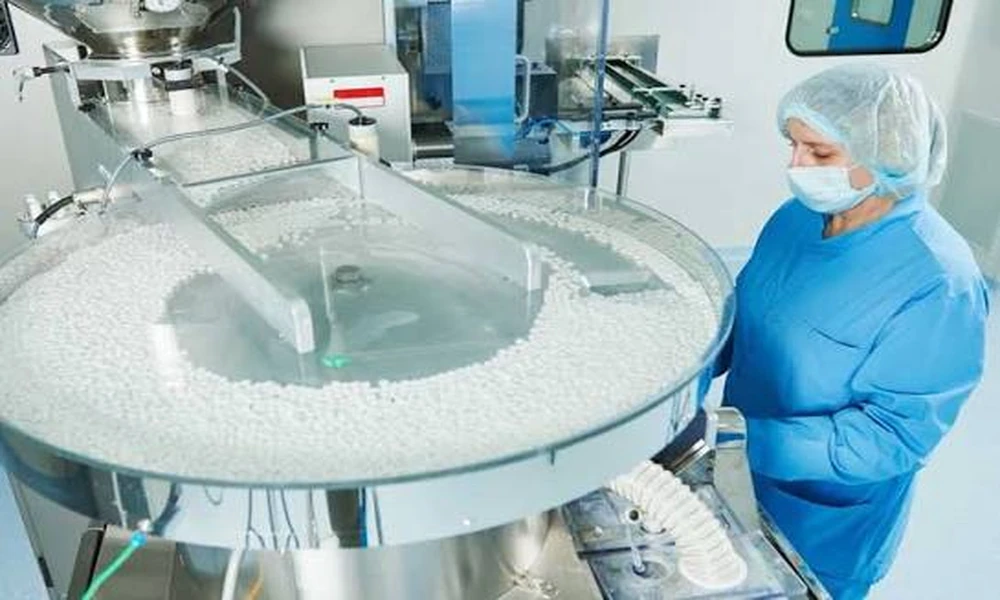

Most conversations about industrial air filtration start with worker safety, and that makes sense. Breathing hazards are serious. But in food and pharmaceutical manufacturing, airborne contamination is a product quality problem first and a safety problem second. A batch that fails a micro test, a tablet press that starts binding because of dust buildup, a powder blend that picks up stray particulate from another line. These are the issues that trigger recalls, rework, and failed audits. And in almost every case, the air in the facility is part of the story.
If you run a food or pharma plant, you already know your air is a process input. Here is what tends to get missed: the filtration systems that keep workers safe are not always the same systems that protect the product. Understanding the difference matters.
The Product Quality Problem Hiding in Your Air
Food and pharmaceutical facilities generate dust constantly. Tablet compression throws off fine pharmaceutical powder. Blending and granulation release particulate that stays suspended for hours. Milling, sieving, packaging, and conveying all add to the load. In food plants, flour, sugar, starch, milk powder, spices, and protein powders behave the same way.
That dust does three kinds of damage.
First, it contaminates product. Suspended particulate drifts between zones. If you run more than one product, or more than one flavor, or an allergen line next to a non-allergen line, cross-contamination through the air is a real risk. Airborne allergen transfer is one of the harder problems in food safety because it is invisible and it travels. A dust collection system with proper source capture at each generation point, combined with zone isolation in the duct design, is how you keep one line’s material out of another line’s product.
Second, dust degrades equipment. Fine powder works its way into bearings, sensors, optical inspection systems, and control panels. Tablet presses are especially sensitive. Powder buildup on punches and dies causes weight variation and sticking, which means rejects and teardown time. In packaging areas, dust fouls date coders, vision systems, and heat sealers. Every one of those failures traces back to air that was not captured where the dust was made.
Third, dust creates compliance exposure. FDA inspections under current food and drug manufacturing practice rules, along with third-party audits from the major food safety certification bodies, all look at your facility’s control of airborne contamination. An inspector who sees visible dust accumulation on overhead surfaces, ductwork, or equipment tops is going to ask how you control it. “We clean it” is a weaker answer than “we capture it at the source.”
Why Source Capture Beats Cleanup Every Time
The instinct in a lot of facilities is to manage dust with housekeeping. Sweep it, vacuum it, wipe it down on the sanitation schedule. Housekeeping matters, but it is a downstream control. By the time dust has settled on a surface, it has already traveled through your air, past your open product, and across your equipment.
Source capture is different. It means pulling the contaminant into a collection system at the point where it is generated, before it enters the room air. A capture hood at the tablet press discharge. A downdraft pull at a powder filling station. Enclosed transfer points connected directly to ductwork. Done right, the dust never becomes room air at all.
The difference shows up in your sanitation labor too. Plants that capture dust at the source spend less time on ladders wiping overhead structure, less time on deep cleans between product changeovers, and less time chasing the recurring “why is there powder on top of the panel again” complaints. That is a measurable operating cost, not just a comfort.
Filtration Stages and What They Actually Do
A well-designed system for these industries is usually a multi-stage arrangement. The first stage handles the bulk load, typically a self-cleaning cartridge collector using pulse-jet cleaning to knock caked dust off the filter media on a cycle. Cartridge media is selected based on the dust itself, particle size distribution, hygroscopic behavior, and whether the material is sticky or free-flowing. Food powders with fat or moisture content behave very differently from dry starch, and the media choice has to reflect that.
Downstream, high-efficiency filtration catches the fine fraction. In pharmaceutical applications, where potent compounds and fine respirable powders are common, a HEPA-grade final stage is often specified. In food plants, the final filtration requirement depends on the product risk, but allergen control and micro control both push facilities toward higher efficiency than a general industrial application would need.
One design decision that comes up a lot in these industries: recirculate or exhaust? Recirculating filtered air back into the plant saves heating and cooling energy, which matters in a facility that runs conditioned or humidity-controlled air. It is viable when the filtration is reliable and monitored. Exhausting outside is the conservative choice when the material is potent, allergenic, or when any filtration failure would be unacceptable. That is a risk decision, not just an engineering one, and it deserves a real conversation rather than a default.
The Cross-Contamination Question
If your facility runs multiple products, the ductwork design deserves as much attention as the collectors. Shared collection systems can move material from one zone to another unless the design accounts for it. Dedicated collection per line, isolation dampers, and careful balancing are the tools. In allergen-sensitive food production, some plants go as far as fully separate collection systems for allergen and non-allergen lines because a shared system is a shared risk.
This is also where a lot of standard, off-the-shelf systems fall short. A collector sized for a metalworking shop is not automatically wrong for a food plant, but the duct routing, the media selection, and the cleaning cycle all need to reflect what the material is and what happens if it ends up in the wrong place.
Sanitation and Cleanability
Food and pharma add a requirement that most industrial applications do not have: the equipment has to be cleanable. Collectors, hoods, and ductwork in food facilities need smooth surfaces, accessible access doors, and designs that do not trap product where it can spoil or harbor pests. Stainless construction or food-safe coatings are common in product contact zones. In pharma, the same logic applies with an added concern around potent compound containment.
A dust collection system that cannot be properly cleaned becomes its own contamination source. That is a failure mode most facilities never consider until an audit or an investigation points at it.
Where to Start
If you are unsure whether your air is protecting your product or working against it, a few signals tell you a lot. Visible dust on overhead surfaces and equipment tops between sanitation cycles. Recurring weight or fill variation on dusty lines. Product changeovers that require extensive cleaning. Audit findings related to contamination control. Any of those point to capture problems.
The fix usually starts with an assessment of where dust is generated, how much, and what kind, then a system design built around those specifics rather than a generic unit bolted onto the wall. Facilities that get this right tend to find that product quality improves, sanitation labor drops, and audit conversations get shorter. The air in your plant is either part of your process control or part of your problem. In food and pharmaceutical manufacturing, there is not really a third option.
How Industrial Air Filtration Protects Product Quality in Food and Pharmaceutical Manufacturing