
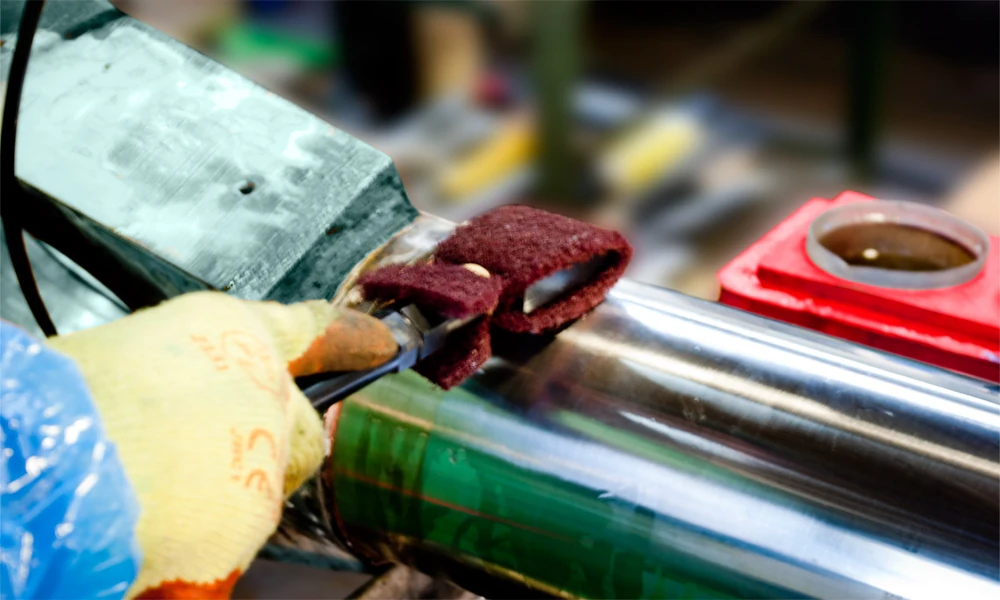

Tear down a hydraulic cylinder that has been in service for a few years and you’ll usually find the same story. The seals are worn out, the rod shows scoring near the gland, and the bore has wear ridges from thousands of cycles. At first glance, the component looks ready for the scrap bin, and plenty of maintenance departments assume the only option is an expensive replacement.
In reality, most of those cylinders can be restored to like-new condition. Hard chrome plating, combined with precision grinding, has been the backbone of professional hydraulic repair services for decades. It allows worn rods, barrels, and other critical surfaces to be built back up with new material and returned to their original dimensions, often with better wear resistance than the part had when it was new.
Here’s how the process works, why hard chrome is such a good match for hydraulic components, and what separates a quality rebuild from a patch job.
Why Hydraulic Components Wear Out
Hydraulic rods and cylinders live in a hostile world. A chrome-plated rod pushes through a seal thousands of times a day, often exposed to grit, moisture, and whatever environment the machine operates in. Fine particles get dragged under the seal and act like sandpaper against the rod surface. Add side loading, pressure spikes, and the occasional impact, and even a well-maintained cylinder eventually shows its age.
The most common damage patterns include:
Rod scoring. Longitudinal scratches along the rod, usually from contamination being dragged through the seal. Even shallow scratches matter because they become leak paths for pressurized fluid and they tear up seals in a hurry.
Corrosion pitting. The chrome layer protects the steel underneath, but once a scratch or impact breaches it, rust sets in quickly. A pitted rod will destroy a fresh set of seals in short order.
Barrel wear. The inside of the cylinder tube wears in the zone where the piston travels, especially under side loads or with contaminated fluid. The bore goes out of round or becomes bell-mouthed at the ends, and the piston can no longer seal properly.
Galling. In severe cases, metal-to-metal contact between the piston and barrel, or the rod and gland, tears up both surfaces badly enough that the cylinder seizes.
Notice the common thread. In every one of these scenarios, material has been removed from a surface that needs to be smooth, round, and dimensionally precise. That is exactly the problem hard chrome plating was designed to solve.
What Hard Chrome Is (and Isn’t)
Hard chrome goes by several names, including industrial chrome and engineered chrome, but it has nothing to do with the decorative shiny chrome on motorcycle parts. It’s a functional electroplated layer of chromium applied in thicknesses ranging from a few ten-thousandths of an inch up to twenty thousandths or more, depending on the job.
The properties that make it so useful in hydraulics:
Hardness. Hard chrome deposits typically measure around 68 to 72 on the Rockwell C scale, harder than most hardened steels. It shrugs off the abrasive wear that destroys bare steel surfaces.
Low friction. Chrome running against rubber seal materials generates less friction than steel against the same seals. Less friction means less seal wear and less heat.
Corrosion resistance. Chromium forms a naturally passive surface film that resists rust and chemical attack, protecting the steel beneath it.
Dimensional control. A properly applied deposit adheres tightly to the base metal and can be ground to very tight tolerances with an excellent surface finish.
The plating process itself is electrochemical. The component is cleaned meticulously, masked where plating isn’t wanted, and submerged in a chromic acid electrolyte bath. Controlled electrical current causes chromium to deposit onto the surface, building the layer atom by atom. Because the deposit follows the existing geometry, it can build up a single worn zone or an entire surface uniformly.
The Restoration Process, Step by Step
A well-executed rod or cylinder rebuild follows a fairly standard sequence. Knowing the steps helps you judge whether a shop is doing the job right.
1. Tear-Down and Inspection
The cylinder comes completely apart and every component gets measured. The rod is checked for straightness, diameter, and surface condition. The barrel is measured for taper, roundness, and wear. Anything salvageable is noted, and anything beyond saving is flagged for replacement. A reputable shop will share the findings with you before any work begins.
2. Pre-Machining
This is the step most people outside the trade don’t know about. Before plating, the damaged surface is machined or ground to remove all defective material and expose clean, sound steel. Plating over a scratch or pit just lets the defect telegraph straight through the deposit. The plating layer is only as good as the surface beneath it. Pre-machining also establishes a uniform base so the final plated dimension can be hit accurately.
3. Cleaning and Surface Preparation
Plating is ruthlessly unforgiving of contamination. Any trace of oil, oxide, or residue left on the surface will cause the deposit to blister or peel later. Professional plating operations use multi-stage cleaning, acid activation, and careful rinsing to guarantee adhesion. This is one of the biggest differences between a quality job and a poor one, and the failure usually doesn’t reveal itself until the component is back in service, at which point it shows up as flaking chrome and a ruined seal.
4. Plating
The component goes into the bath and chromium is deposited to a calculated thickness. The shop plates deliberately oversize, typically a couple of thousandths, because plating alone can’t hold the tight tolerances hydraulic components demand. The final dimension gets achieved in the grinding step.
5. Grinding to Final Dimensions
This is where the precision happens. The plated surface is ground on a cylindrical grinder to bring the rod or bore back to its specified diameter, roundness, and surface finish. Rods need a finish smooth enough to protect the seals but with just enough texture to hold a lubricant film. Shops that grind in-house have a real advantage here. When plating happens at one vendor and grinding at another, you get extra freight, extra handling, and a real risk of miscommunication about final dimensions.
6. Reassembly and Testing
The rebuilt component goes back together with new seals and hardware, then gets tested. A cylinder should be pressurized and checked for leaks across its full stroke, and the results should be documented. If a shop’s answer to “how do you test it?” is vague, take note.
Why This Combination Endures
The plating-plus-grinding approach has survived decades of competing technologies for a simple reason: it doesn’t just patch the damage, it reverses it. A ground hard chrome surface on a rod is frequently more wear resistant than the original factory surface. Modern cylindrical grinding holds the kind of tolerances that let a rebuilt part fit and seal exactly as the manufacturer intended.
Compare the alternatives. Full replacement is expensive and sometimes impossible when the equipment is obsolete. Weld buildup and machining works for some parts, but welding on long, slender components introduces heat distortion, and the deposited material is less uniform than plated chrome. Plating, by contrast, deposits evenly at relatively low temperature, which is a major advantage for parts where distortion would ruin the geometry.
What a Buyer Should Ask
If you’re sending hydraulic components out for this kind of work, a few questions will tell you a lot:
What plating thickness are you applying, and why? A thin cosmetic flash of chrome won’t survive in service. Rods need a substantial functional deposit, and the shop should be able to justify its numbers.
What does your pre-machining involve? If a shop proposes plating over existing damage without removing it first, walk away. The deposit will fail.
How do you control adhesion? Good shops monitor bath chemistry, current density, and temperature, and they stand behind their work with a warranty.
Are you addressing the whole component? A rebuilt rod going back into a worn barrel, or the reverse, will leak again soon. The best repairs fix every worn surface, not just the obvious one.
Who handles plating, grinding, and reassembly? A single shop controlling the entire process generally delivers a faster turnaround than a repair routed through multiple vendors, and on a critical machine, every day of downtime carries a real cost.
The Bottom Line
Hard chrome plating combined with precision grinding remains one of the most proven restoration methods in industrial maintenance. It takes a scored, pitted, or worn hydraulic component and returns it to original specification, often with better durability than it had from the factory, at a fraction of replacement cost.
The catch is that the process only works when every link in the chain is strong. Sound pre-machining, disciplined cleaning, controlled plating, and accurate final grinding all have to be done right, and a weak link anywhere shows up as a premature failure down the road. Choose a repair partner that controls the whole process in-house, tests what it builds, and can tell you exactly what was done to your part. Do that, and a cylinder that looked ready for the scrap heap can go back to work for years.
Hard Chrome Plating in Hydraulic Repair: How Rods and Cylinders Are Restored to Spec