
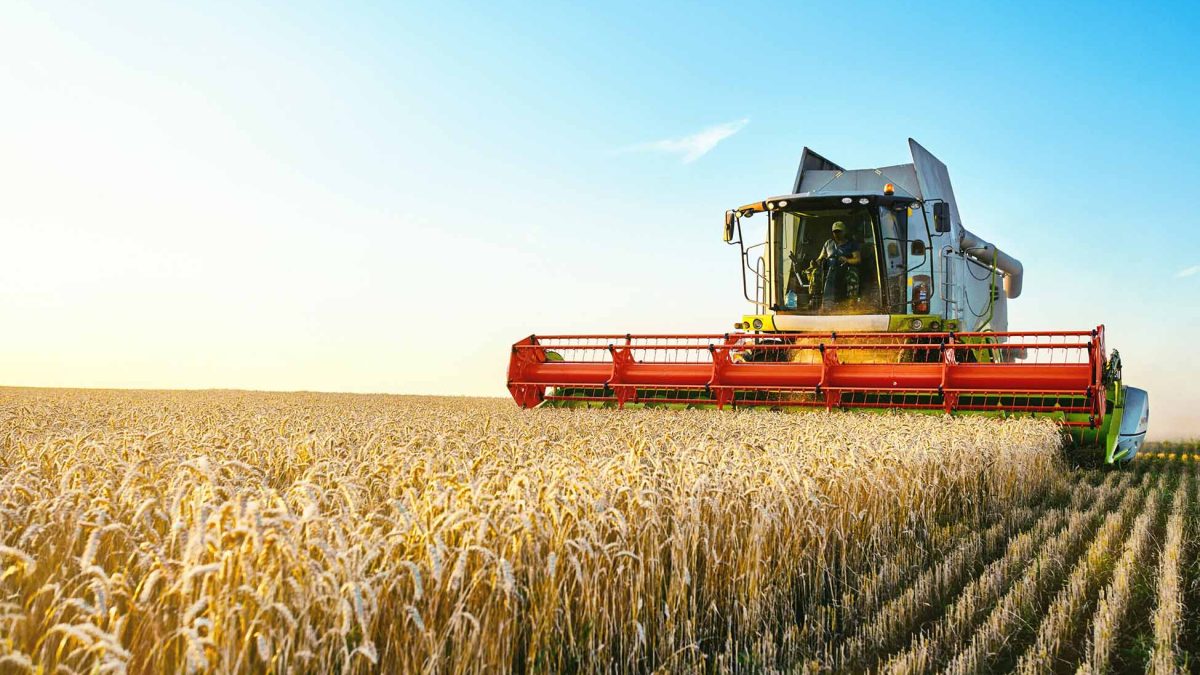

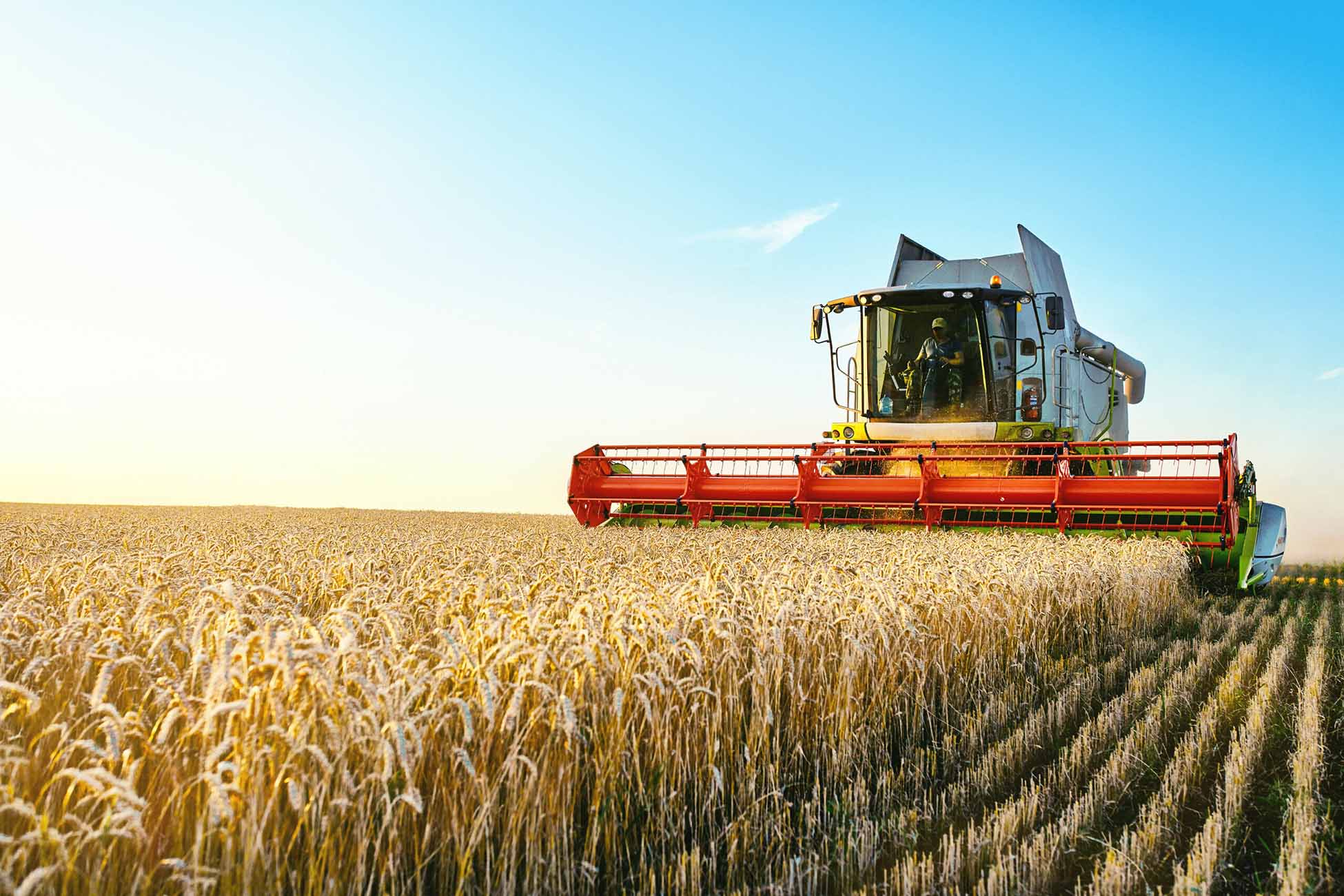
Walk through the service bay at any equipment dealership and look closely at what is being replaced. Increasingly, the failed components coming off modern tractors, planters, and combines are not welded assemblies of cut plate and tube. They are housings, brackets, and mounting structures that were designed as one piece from the start. The shift is deliberate. As agricultural machinery has gotten lighter, more electronics-dense, and more expensive to maintain, equipment engineers have moved away from fabricated parts and toward aluminum castings for a growing share of components. The reasons are worth understanding for anyone who designs, builds, or services farm equipment.
This article looks at why that shift is happening, what castings do better than fabrications, and where the trade-offs sit.
The Old Default: Cut, Weld, Assemble
For most of the history of farm equipment, if a part was not simple enough to buy off the shelf, it got fabricated. A welder took steel plate, tube, and angle stock, cut them to shape, and welded them into a housing or bracket. The approach made sense for its time. Fabrication needs no tooling investment, works in low volumes, and can be done in almost any shop with a welder and a cutting table.
But the approach carries costs that show up later. Welded assemblies are heavy, because steel is heavy and because every joint needs overlap, gussets, and fasteners. They are inconsistent, because weld quality varies with the welder, the setup, and the day. They have built-in failure points, because every weld is a potential crack initiation site under the vibration and shock loading that farm equipment sees constantly. And they are expensive to change, because revising a welded design often means reworking the entire build sequence.
Modern equipment has exposed those weaknesses. Machines carry more sensors, more hydraulics, and more electronics than ever, all of which need precise, stable mounting. Weight matters more too, both for fuel efficiency and for soil compaction, which has become a major concern in row crop operations. Fabrication struggles to keep up with those demands. Casting answers them directly.
What Castings Do Better
Part Consolidation
The single biggest advantage of casting is that complexity is nearly free. A fabricated hydraulic valve block might consist of a machined block plus six welded fittings, brackets, and mounting tabs. A casting can integrate all of it: the fluid passages, the mounting bosses, the bracket geometry, and the external mounting points, in one component.
Every feature consolidated into a casting is a part that does not need to be ordered, stocked, fitted, and inspected. It is a weld that does not exist and therefore cannot crack. For equipment manufacturers managing bills of materials that run into thousands of line items, consolidation is a quiet but powerful cost reducer.
Weight Reduction
Aluminum weighs roughly a third as much as steel, and cast parts can be engineered with material only where it is needed, since the casting process places metal according to the function of each section. The combined effect is substantial. A cast aluminum gearbox or hydraulic housing often weighs dramatically less than the welded steel assembly it replaces.
On a tractor, that weight savings compounds. Lighter components reduce the load on the machine’s own structure, allow lighter supporting frames, and reduce the energy needed to move the implement. For equipment that runs hundreds of hours per season, the fuel savings are real. And for growers worried about soil compaction, every pound taken off the machine is a benefit that shows up in the field.
Dimensional Stability and Precision
Fabricated parts move. Welding introduces residual stresses that relax over time, and a welded assembly that was in tolerance when it left the shop can drift out of tolerance after a season of vibration. Cast aluminum parts, properly designed and heat treated where required, hold their geometry.
That stability matters more than it used to. Modern seed meters place individual seeds at precise spacing. Sensor enclosures must keep electronics aligned and protected. Hydraulic manifolds must seal pressure without weeping. These are jobs for a component that stays where it was put, and castings deliver that.
Corrosion Resistance
Farm equipment lives in a hostile chemical environment: fertilizer, crop treatments, manure, road salt, and constant moisture. Steel fabrications depend on coatings for protection, and coatings get scratched, chipped, and worn through, especially at welds where surface preparation is hardest. Aluminum forms a protective oxide layer naturally and resists that environment far better, which is one reason it has become the default choice for housings and covers exposed to the elements.
Thermal Performance
Hydraulic systems, transmissions, and electronics all generate heat, and aluminum conducts it away far better than steel. Cast housings can act as heat sinks, spreading thermal load through the structure and reducing the need for separate cooling hardware. For hydraulic pump and valve housings in particular, that thermal behavior supports consistent performance through long duty cycles.
Why Aluminum Specifically
Casting is not new to agriculture, of course. Iron castings have been used in farm equipment for over a century. The move toward aluminum is the more recent shift, and it is driven by the same trends pushing fabrication out: weight and precision.
Alloys in the 356 family, often heat treated, provide the strength needed for structural and pressure-containing components like gearbox housings and hydraulic manifolds, while remaining highly machinable. That machinability matters because castings are rarely used as-poured. Sealing surfaces, bearing bores, and threaded features get machined, and aluminum machines faster and with less tool wear than iron or steel. The result is a part that combines the shape freedom of casting with the precision of machining, at a weight no iron or steel component can match.
Where Fabrication Still Wins
Honesty requires acknowledging the limits. Fabrication remains the right choice for many applications. Very low volume parts, one-off repairs, extremely large structural members, and components subject to abrasion from soil contact are often better served by steel plate, whether welded or plasma cut. Casting also requires tooling, so parts with short production runs need the tooling cost amortized over enough units to make sense.
The trend, though, is clear. As equipment platforms are produced in volume and redesigned on regular cycles, more components cross the threshold where casting pays for itself. Each new machine generation tends to convert a few more parts from welded assemblies to engineered castings.
The Service Side of the Story
For dealerships and repair shops, the shift changes the parts business. A cast housing that replaces a six-piece welded assembly is one part number instead of six, one gasket surface instead of several, and a repair that goes faster with fewer surprises. Castings also fail more predictably. A weld cracks without warning; a well-designed casting with proper process control behind it tends to hold up until the component is simply worn out.
That reliability story starts at the foundry. Alloy verification, in-process dimensional checks, and mechanical property testing are what separate a casting that survives ten seasons from one that develops porosity in a pressure passage. Equipment makers have learned to ask their casting suppliers hard questions about quality systems, and the suppliers who can answer them well are the ones winning the work.
The Bottom Line
The replacement of fabricated parts by aluminum castings on farm equipment is not a fashion. It is the result of equipment requirements moving in a direction that casting serves better: lighter machines, integrated components, stable precision, and long service life in corrosive conditions. Fabrication will always have its place on the farm, but the center of gravity in component design has shifted, and every new machine that rolls off the line carries more cast aluminum and less welded steel than the generation before it.
Why Agricultural Machinery Aluminum Casting Is Replacing Fabricated Parts on Modern Farm Equipment